Assessment and Evaluation CTET Notes 2026 — आकलन एवं मूल्यांकन
Assessment and Evaluation CTET Notes 2026 — आकलन एवं मूल्यांकन
Assessment and Evaluation CTET Notes 2026 CTET Paper I और Paper II के CDP/Pedagogy section का ऐसा topic है जहाँ students सबसे ज़्यादा confusion formative, summative, assessment, evaluation, test, measurement, CCE, rubric, feedback और learning outcomes में करते हैं। CTET direct definition नहीं, बल्कि situation-based pedagogy पूछता है। इस guide को पढ़ने के बाद आपको पता होगा: → assessment और evaluation में exact फर्क क्या है, classroom-based MCQ में correct pedagogical option कैसे identify करना है, और CTET के PYQ pattern के हिसाब से feedback, CCE, diagnostic test, remedial teaching और competency-based questions कैसे solve करने हैं। इसे skip मत कीजिए, क्योंकि यह topic pedagogy के कई दूसरे chapters को जोड़ता है।
सबसे surprising बात यह है कि exam में “good assessment” का मतलब सिर्फ परीक्षा लेना नहीं होता। Good assessment वह है जो child की learning को improve करे, teacher को next step बताए, और child को label करने के बजाय support दे। यही reason है कि CTET में punitive testing, rote recall-only exam, comparison-based marking और one-size-fits-all testing अक्सर wrong options बनते हैं।
📑 Table of Contents
📘 Assessment & Evaluation कितना Important है? — Exam Weightage
| Exam | Approx. Questions | Common Focus |
|---|---|---|
| CTET Paper I | 2–4 | CCE, formative assessment, feedback, child-friendly assessment |
| CTET Paper II | 2–5 | diagnostic test, rubric, learning outcomes, inclusive assessment |
| Other TET/TGT | 2–6 | norm vs criterion, validity, reliability, remediation |
- यह topic isolated नहीं है; यह Teaching Methods & Classroom Management notes, Bloom’s Taxonomy & Learning Outcomes notes, और Important CTET Pedagogy Concepts notes से जुड़ता है.
- CTET में correct option प्रायः child progress, feedback, flexibility और remedial planning पर आधारित होता है.
- “Only marks” approach, “public comparison”, “rote written test only” जैसे options distractor होते हैं.
- Assessment and Evaluation CTET Notes 2026 type topic में terminology precision बहुत important है।
Actual PYQ stem: “Formative assessment is primarily used for…”
Answer: Improving teaching-learning during the process.
Reasoning: Formative assessment ongoing होती है; इसका purpose judgement से पहले improvement है।
📘 Core Concept Notes — Assessment and Evaluation CTET Notes 2026
- Assessment broader process है; test उसका केवल एक tool हो सकता है.
- Evaluation usually judgement-oriented होता है.
- Measurement = quantity assign करना; assessment = interpretive use; evaluation = value judgement.
- Expected MCQ stem: “Which of the following best distinguishes assessment from evaluation?”
- NCERT and pedagogy context में child progress tracking marks से wider माना जाता है.
🧠 Memory Trick available: “Measurement → Assessment → Evaluation” — Mnemonics section में देखें
Layer 1 — Foundation (CTET Paper I / PRT): छोटे बच्चों के context में assessment child को डराने के लिए नहीं, समझने के लिए होती है। अगर Class 3 का बच्चा reading में अटक रहा है, तो teacher बार-बार final marks देने के बजाय oral reading, picture identification, sound recognition, peer reading और short feedback के through progress समझ सकता है। यही child-friendly assessment है। CTET पूछ सकता है: “A primary teacher should assess children by…” और सही option activity-based, observation-based, continuous और stress-free होगा।
Layer 2 — Intermediate (CTET Paper II / TGT): यहाँ formal distinctions आते हैं—formative vs summative, diagnostic vs placement, criterion-referenced vs norm-referenced. Formative assessment ongoing feedback देती है। Summative unit/end-term achievement judge करती है। Diagnostic test learning difficulty का exact area identify करता है। Placement test child को suitable level/group में place करने के लिए होता है। Criterion-referenced test pre-decided outcomes के against performance compare करता है; norm-referenced दूसरों के against rank/relative position बताता है। CTET में usually criterion orientation preferred होती है क्योंकि school learning outcome mastery important माना जाता है।
| Feature | Assessment | Evaluation |
|---|---|---|
| Nature | Evidence collection and interpretation | Value judgement / decision making |
| Focus | Improve learning | Judge worth or effectiveness |
| Feature | Formative | Summative |
|---|---|---|
| When | During learning | End of unit/term |
| Purpose | Improve and guide | Certify and report |
Actual PYQ stem: “The purpose of diagnostic assessment is to…”
Answer: Identify learning difficulties and their specific causes.
Reasoning: Diagnostic test marks देने से ज्यादा gap locate करने के लिए होता है।
Layer 3 — Advanced (PGT/KVS depth, useful for CTET precision): High-quality assessment validity, reliability, objectivity, usability और fairness पर भी depend करती है। Validity पूछती है: test वही measure कर रहा है जो उसे करना चाहिए? Reliability पूछती है: result consistent है? Objectivity especially scoring में bias-free clarity चाहती है। Fairness inclusive education से जुड़ती है—language load, disability accommodation, cultural familiarity और response mode flexibility important हो जाते हैं। Modern pedagogy में assessment सिर्फ achievement score नहीं, बल्कि learning evidence ecology माना जाता है। इसलिए project, anecdotal record, peer assessment, self-assessment, portfolio, rubric and observation—all together better picture दे सकते हैं।
📘 Pedagogy & NCF/NEP Angle
- Piaget link: child active learner है, इसलिए assessment hands-on tasks और developmental readiness को ध्यान में रखे.
- Vygotsky link: scaffolding के दौरान observation teacher को child की ZPD समझने में मदद करती है.
- Bloom link: केवल remembering नहीं; understanding, applying, analyzing तक varied items होने चाहिए.
- Inclusive note: alternative response modes, extra time, oral support, visual aids जैसे accommodations valid assessment को strengthen करते हैं.
- Feedback descriptive होना चाहिए: “तुमने यह part सही समझा, अब यह next step करो।”
CCE का exam logic भी यहीं से निकलता है। Continuous का अर्थ बार-बार test paper नहीं, बल्कि regular observation, classwork analysis, oral questioning, notebook review, project, quiz, participation, anecdotal records और timely feedback है। Comprehensive का अर्थ केवल scholastic marks नहीं, बल्कि broader development और multiple abilities को देखने की कोशिश है। CTET में अगर CCE का option punishment-free, stress-free, holistic और improvement-oriented language use करे, तो वही usually सही answer होता है।
Actual PYQ stem: “Continuous and Comprehensive Evaluation aims at…”
Answer: Assessing learner development continuously through multiple methods for improvement.
Reasoning: CCE single exam dominance को reduce करता है और child progress को broader lens से देखता है।
📘 Current Updates Injection
→ Exam Impact: recall-only tests की बजाय application-based assessment options stronger दिखेंगे.
Policy discourse influenced by Ministry of Education continues to push holistic progress cards and flexible evidence collection.
→ Exam Impact: portfolio, rubric, descriptive feedback and progress tracking-based MCQs बढ़ सकते हैं.
NCF 2023 orientation language में assessment को learning support mechanism के रूप में present किया गया है।
→ Exam Impact: child comparison और rigid marks-only options और कमजोर distractors बनेंगे.
📘 Deep Theory + Flowcharts
अब पूरे topic की deep chain समझिए। Effective classroom assessment एक linear paper-checking act नहीं है; यह cycle है। पहले learning objective clear होता है। फिर evidence collection tool choose होता है। फिर response, performance, participation या product observe किया जाता है। फिर interpretation होती है। फिर feedback दिया जाता है। फिर remedial या enrichment planning होती है। और फिर re-assessment से progress check होती है। यही chain CTET के multiple sub-questions को connect करती है।
Diagnostic assessment को formative से confuse मत कीजिए। हर diagnostic activity formative purpose serve कर सकती है, लेकिन हर formative activity diagnostic depth नहीं रखती। Diagnostic अधिक specific होती है—यह exact misconception locate करती है। उदाहरण के लिए reading assessment में child unfamiliar words पर अटक रहा है या phoneme-grapheme mapping में issue है? Math में place value problem है या operation sequence issue? CTET में जब question specific cause पता करने की बात करे, diagnostic orientation देखें।
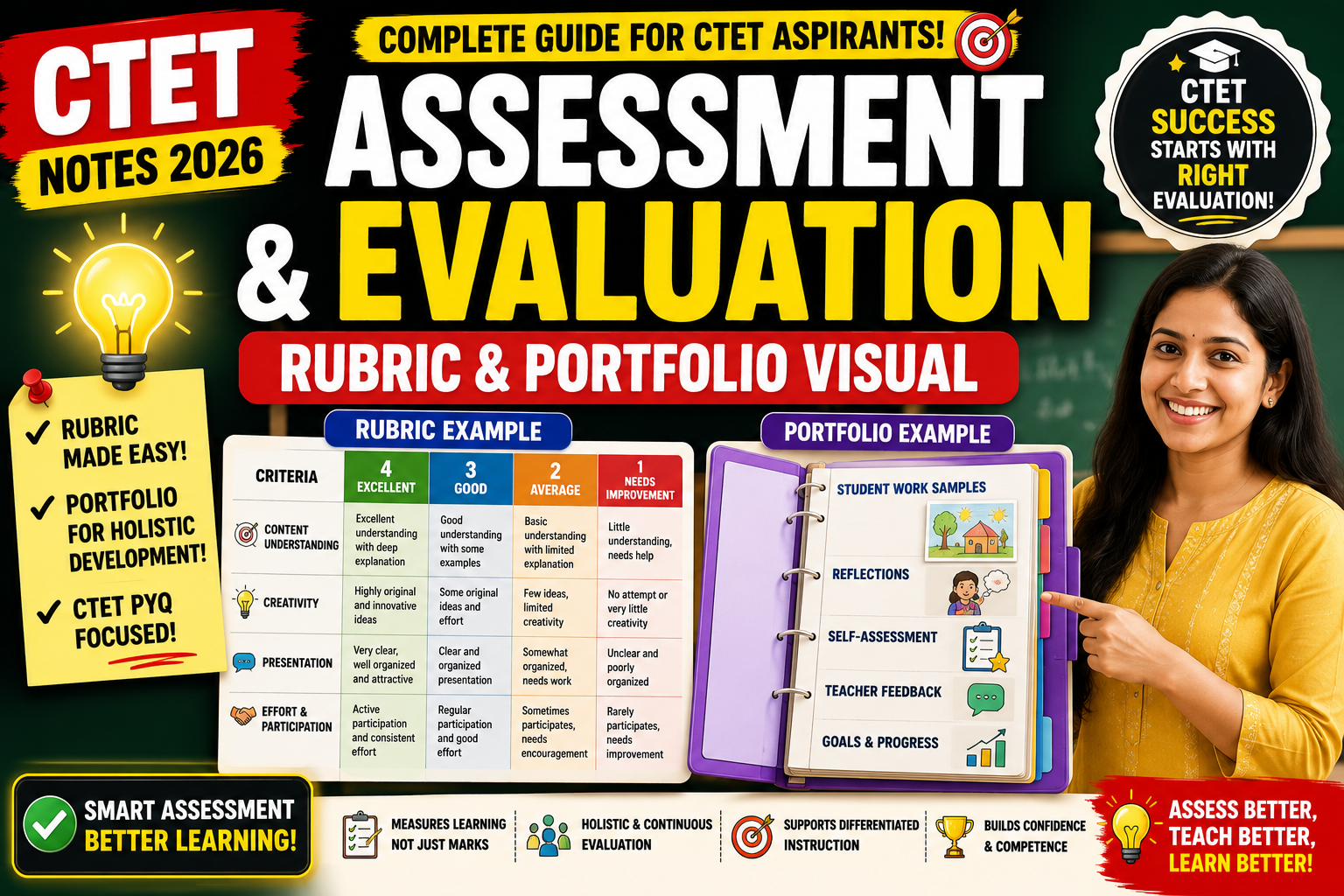
इसी तरह self-assessment और peer assessment भी modern pedagogy में important हैं। इनका मतलब teacher responsibility छोड़ना नहीं, बल्कि students को criteria-aware बनाना है। अगर बच्चा rubric के आधार पर अपना काम review करता है, तो metacognition develop होती है। यदि peer feedback structured है, तो collaborative learning improve होती है। लेकिन public shaming, random peer marking या popularity-based feedback good assessment नहीं मानी जाएगी।
Inclusive assessment angle भी equally critical है। यदि question पूछे कि visually impaired learner, dyslexic learner, hearing-impaired learner या multilingual background वाले child की assessment कैसे हो, तो correct answer response accessibility improve करेगा, standard को meaningless नहीं बनाएगा। यही सोच Children with Special Needs notes और Inclusive Education notes से directly जुड़ती है।
Actual PYQ stem: “The most useful assessment to plan remedial teaching is…”
Answer: Diagnostic assessment supported by formative evidence.
Reasoning: Remedial planning specific weakness location के बिना effective नहीं होती।
📘 Comparison & Differentiation
| Feature | Diagnostic Test | Achievement Test |
|---|---|---|
| Purpose | Find cause of difficulty | Measure learning attained |
| Use | Remedial planning | Reporting achievement |
| Feature | Norm-Referenced | Criterion-Referenced |
|---|---|---|
| Comparison Base | Other learners | Pre-set criterion/outcome |
| Preferred in CTET pedagogy | Less preferred in classroom learning support | More aligned with mastery and outcomes |
🧠 Memory Trick available: “Formative, Diagnostic, Summative, Criterion Signals” — Mnemonics section में देखें
📘 Mnemonics & Memory Architecture
📘 Conclusion + Next-Topic Roadmap
- 17. Bloom’s Taxonomy & Learning Outcomes — assessment तभी strong समझ आएगा जब outcome levels और question design का link clear हो। Study Time: 2.5 Hours
- 16. Teaching Methods & Classroom Management — teaching strategy और assessment strategy का alignment CTET pedagogy का central logic है। Study Time: 2 Hours
- 12. Inclusive Education — accessible and fair assessment को अच्छे से समझने के लिए inclusive framework तुरंत पढ़ना चाहिए। Study Time: 2.5 Hours
Assessment & Evaluation को और गहराई से समझने के लिए NCF 2005, NEP 2020 और NIPUN Bharat के official resources देखें।
Recommended Study Path: Teaching Methods & Classroom Management → Assessment & Evaluation → Bloom’s Taxonomy & Learning Outcomes.
❓ Frequently Asked Questions — Assessment and Evaluation CTET Notes 2026
What is the meaning of Assessment and Evaluation CTET Notes 2026 in exam terms?
Exam terms में यह topic learning evidence, feedback, judgement, testing tools और classroom improvement के बीच distinction को समझने से जुड़ा है। CTET इसे direct definitions और pedagogy-based MCQs दोनों में पूछता है.
How is formative assessment asked in Assessment and Evaluation CTET Notes 2026?
Formative assessment usually improvement-oriented situation, ongoing feedback, observation, classwork review या remedial teaching planning के रूप में पूछा जाता है। “During learning” इसका key phrase है.
What is the difference between assessment and evaluation?
Assessment evidence collect और interpret करती है, जबकि evaluation उसी evidence के आधार पर judgement या decision देती है। आसान सूत्र: assessment informs, evaluation decides.
Why is diagnostic test important in CTET pedagogy?
क्योंकि diagnostic test exact learning gap और उसकी वजह identify करता है। Remedial teaching planning के लिए यह सबसे useful tools में से एक है.
Which assessment options are usually correct in CTET?
वे options जो descriptive feedback, observation, multiple tools, child progress, flexibility, criterion-based performance और barrier-free assessment पर जोर दें, अक्सर सही होते हैं। Public ranking और marks-only judgement वाले options कमजोर distractor बनते हैं.
Is CCE only about frequent testing?
नहीं। CCE का अर्थ regular learning evidence, varied methods, holistic development और improvement-oriented feedback है। बार-बार test paper लेना alone CCE नहीं है.
Why are portfolio and rubric important in modern assessment?
Portfolio progress over time दिखाता है और rubric clear criteria देता है। दोनों मिलकर transparent, competency-based और descriptive assessment को stronger बनाते हैं.