Motivation and Attention CTET Notes 2026 — अभिप्रेरणा, ध्यान एवं रुचि
Motivation and Attention CTET Notes 2026 — अभिप्रेरणा, ध्यान एवं रुचि
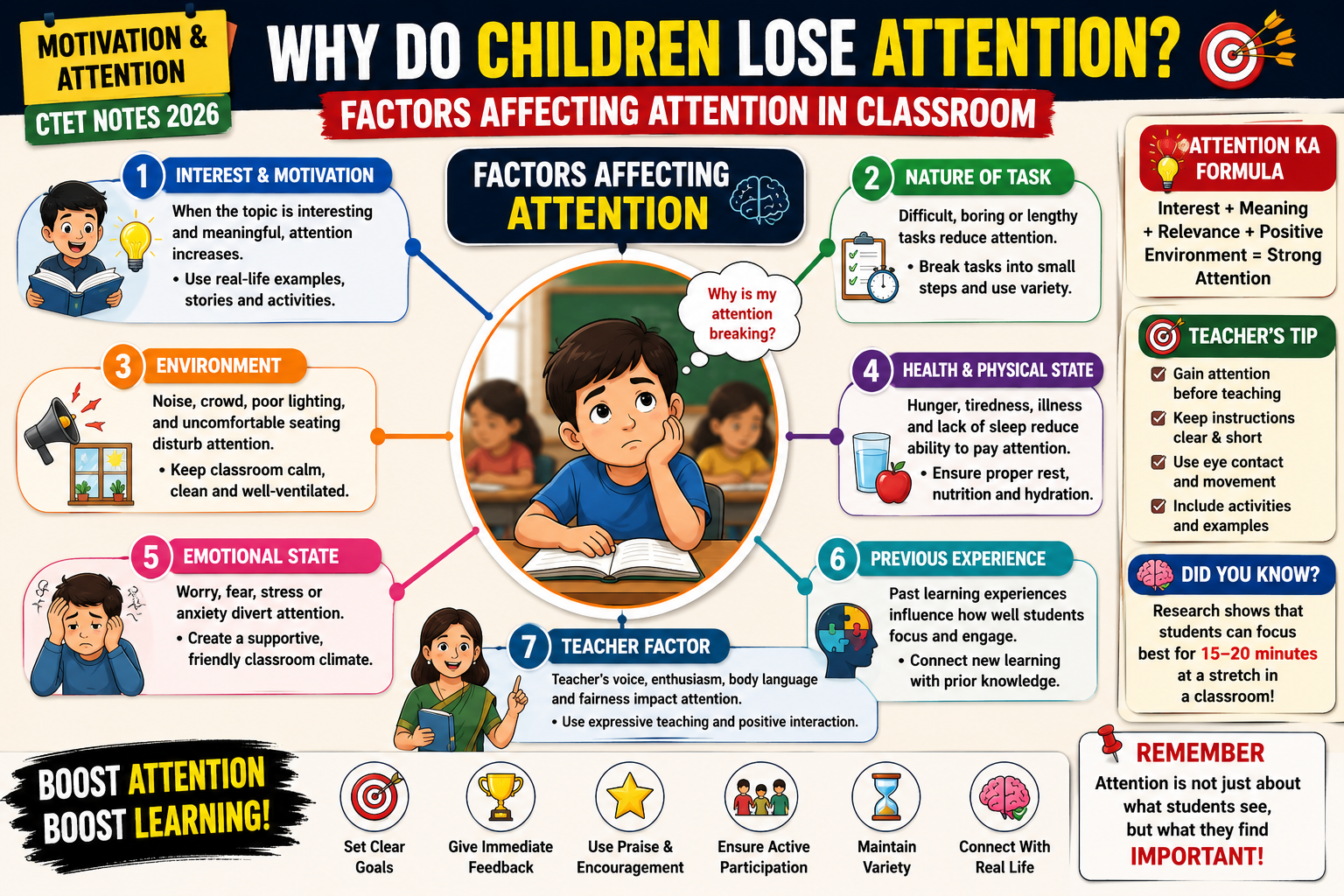
Motivation and Attention CTET Notes 2026 CDP का ऐसा topic है जहाँ direct definition-based MCQ, classroom-situation questions, aur psychology-based application questions बार-बार पूछे जाते हैं। कई students memory, intelligence, learning theories पर focus करते हैं, लेकिन motivation aur attention से जुड़े subtle concepts exam में score separator बनते हैं। इस guide को पढ़ने के बाद आपको पता होगा: → motivation, attention और interest का exact meaning; → intrinsic-extrinsic motivation, types of attention, factors affecting attention जैसे sub-topics; → किसी भी CTET-style MCQ में distractor eliminate कैसे करना है। Read time लगभग 15–17 minutes है — बीच के sections skip मत कीजिए, क्योंकि pedagogy angle aur PYQ logic वहीं clear होगा.
सबसे important बात: CTET Paper I aur II में यह topic अक्सर isolated definition के रूप में नहीं, बल्कि child behaviour, classroom engagement, reinforcement, readiness, distraction, curiosity और learning outcomes के साथ integrated form में आता है। इसलिए केवल रटना enough नहीं है; concept relation समझना जरूरी है।
📑 Table of Contents
📘 Motivation, Attention & Interest कितना Important है? — Exam Weightage
| Exam | Approx. Weightage | Question Style |
|---|---|---|
| CTET Paper I | 1–3 questions | Intrinsic motivation, attention span, child interest, reinforcement-free engagement |
| CTET Paper II | 2–4 questions | Adolescent interest, sustained attention, classroom distractions, pedagogy application |
| TGT/KVS/NVS | 2–5 questions | Theory + practical classroom scenario + psychology terminology |
- CTET में “child-centred learning” को समझने के लिए motivation का concept repeatedly use होता है.
- Attention-related questions अक्सर “which factor distracts learners?” या “teacher should do what to sustain attention?” रूप में आते हैं.
- Interest को motivation से same मान लेना common trap है; exam में इसी confusion पर distractor बनाए जाते हैं.
Actual PYQ stem + answer + 1-line reasoning: “A child learns best when learning itself becomes rewarding. This is called?” Answer: Intrinsic Motivation. Reason: reward learning process के भीतर है, external prize में नहीं।
📘 Core Concept Notes — Motivation and Attention CTET Notes 2026
- Motivation can be intrinsic or extrinsic.
- Intrinsic motivation long-term learning के लिए अधिक effective मानी जाती है.
- Extrinsic motivation short-term performance बढ़ा सकती है, लेकिन overuse intrinsic interest कम कर सकती है.
- Need, drive, goal, incentive — motivation chain के classic terms हैं.
- Achievement motivation, curiosity, aspiration level — TGT level पर relevant terms हैं.
🧠 Memory Trick available: “Types of Motivation” — Mnemonics section में देखें
NCERT Reference: Class 11 Psychology, chapter on Motivation and Emotion; CTET के लिए indirect relevance NCERT child behaviour discussions में दिखाई देती है। Expected MCQ stem: “Which of the following best promotes self-driven learning?”
| Feature | Voluntary Attention | Involuntary Attention |
|---|---|---|
| Meaning | Willpower से directed attention | Stimulus की novelty/intensity से खिंचा ध्यान |
| Example | Difficult chapter पर focus करना | Sudden loud sound पर ध्यान जाना |
| Feature | Fluctuation of Attention | Distraction of Attention |
|---|---|---|
| Meaning | Natural slight shifting of focus | Focus का external/internal cause से टूटना |
| Example | Reading करते समय brief lapse | Mobile notification से पढ़ाई रुकना |
- Attention is selective, dynamic, limited, and goal-related.
- Intensity, novelty, movement, contrast — external factors affecting attention.
- Interest, motive, mental set, emotional state, health — internal factors affecting attention.
- Attention span age के साथ बढ़ता है, लेकिन engagement quality equally important है.
- CTET में teacher action पूछा जाता है: how to retain attention without fear or punishment.
🧠 Memory Trick available: “Factors Affecting Attention” — Mnemonics section में देखें
Expected MCQ stem: “A teacher wants to capture students’ attention at the beginning of a lesson. Which factor is most useful?” Typical answer novelty/contrast/activity-oriented stimulus होगा, not punishment.
| Feature | Motivation | Interest |
|---|---|---|
| Nature | Driving force | Liking or preference |
| Duration | Situational भी हो सकती है | Relatively more stable |
- Interest develops through success, relevance, novelty, participation, and previous experience.
- Child-centred pedagogy interest को suppress नहीं, cultivate करती है.
- Forced drill short-term attention दे सकता है, lasting interest नहीं।
- Interest and attention mutually reinforce each other.
Actual PYQ stem + answer + 1-line reasoning: “Which is the best way to sustain interest among learners?” Answer: Relating content to learners’ experiences. Reason: personal relevance interest formation का strongest classroom factor है।
📘 Pedagogy & NCF/NEP Angle
- Piaget link: child active constructor है; attention concrete experience से stronger होती है.
- Vygotsky link: social interaction और scaffolding motivation बढ़ाते हैं.
- Bloom link: remembering level tasks short attention ला सकते हैं, but applying/creating tasks sustained engagement बढ़ाते हैं.
- Inclusive note: all inattentive behaviour disinterest नहीं होता; health, anxiety, learning difficulty, sensory overload भी कारण हो सकते हैं.
- Assessment angle: praise process, not only marks — this fosters mastery motivation.
NEP 2020 competency-based learning, flexibility, foundational literacy, and joyful classrooms को promote करती है — इसका direct exam impact यह है कि rote-pressure वाली pedagogy usually wrong option बनती है।
NIPUN Bharat primary classrooms में engagement, foundational readiness और contextual learning को emphasize करता है।
→ Exam Impact: policy-based questions में child engagement, experiential learning और pressure-free assessment वाले options stronger होंगे।
📘 Current Updates Injection
→ Exam Impact: motivation and attention questions अब “learner engagement” भाषा में अधिक framed मिल सकते हैं.
As reflected in continuing policy discourse around Ministry of Education initiatives, foundational learning and joyful classrooms remain central.
→ Exam Impact: interest-building, participation and contextual teaching वाले options stronger रहेंगे.
NCF 2023 orientation documents classroom flexibility, multilingual expression और experience-based engagement को importance देते हैं.
→ Exam Impact: student voice, curiosity and active exploration attention-sustaining strategies के रूप में पूछे जा सकते हैं।
📘 Deep Theory + Flowcharts
Actual PYQ stem + answer + 1-line reasoning: “Which one is least likely to enhance intrinsic motivation?” Answer: Repeated material rewards for every small task. Reason: overemphasis on external incentive self-driven learning को weaken कर सकता है।
📘 Comparison & Differentiation Tables
| Feature | Attention | Interest |
|---|---|---|
| Nature | Immediate mental focus | Enduring liking or inclination |
| Duration | Often short and shifting | Comparatively more stable |
| Feature | Intrinsic Motivation | Extrinsic Motivation |
|---|---|---|
| Source | Inner satisfaction | External reward or pressure |
| Best Use | Deep, durable learning | Immediate compliance or short-term push |
- Immediate concentration = attention
- Persistent liking = interest
- Driving force = motivation
- CTET distractors इन्हीं तीनों terms को mix करके बनते हैं
📘 Mnemonics & Memory Architecture
📘 Conclusion + Next-Topic Roadmap
- 5. Learning Process & Principles — motivation aur attention learning के functioning core हैं; यह topic broader learning framework clear करेगा। Study Time: 3 Hours
- 10. Memory, Forgetting & Thinking — attention से encoding शुरू होती है; आगे memory formation को समझना natural next step है। Study Time: 3.5 Hours
- 8. Constructivism & Child-Centred Learning — CTET pedagogy में interest और intrinsic motivation child-centred learning से directly जुड़ते हैं। Study Time: 2.5 Hours
Motivation, Attention & Interest को और गहराई से समझने के लिए NCERT Psychology, NCF 2005, और NEP 2020 के official resources देखें।
Recommended Study Path: Motivation, Attention & Interest → Learning Process & Principles → Memory, Forgetting & Thinking → Constructivism & Child-Centred Learning.
❓ Frequently Asked Questions — Motivation and Attention CTET Notes 2026
What is Motivation and Attention CTET Notes 2026 mainly about?
यह topic motivation, attention और interest के core meaning, types, factors aur pedagogy-based application को cover करता hai, ताकि CTET MCQ और classroom-situation questions solve किए जा सकें।
Why is Motivation and Attention CTET Notes 2026 important for CTET Paper I and II?
क्योंकि child-centred learning, engagement, intrinsic motivation, sustained attention और interest formation से जुड़े questions दोनों papers में repeatedly आते हैं।
What is the difference between motivation, attention and interest?
Motivation behaviour को drive करती है, attention mental focus देता है, और interest किसी activity या subject की positive liking है। तीनों related हैं, लेकिन same नहीं।
Which type of motivation is best for long-term learning?
Intrinsic motivation long-term learning के लिए best मानी जाती है, क्योंकि learner task को external reward के बिना meaningful पाता है।
How can a teacher sustain students’ attention in CTET pedagogy questions?
Best answers usually novelty, relevance, participation, questioning और activity-based learning को prefer करते हैं; punishment या fear-based options usually wrong होते हैं।
Is interest the same as intrinsic motivation?
नहीं। Interest stable liking है, जबकि intrinsic motivation learning activity के भीतर satisfaction-driven force है। Interest intrinsic motivation को strengthen कर सकती है।